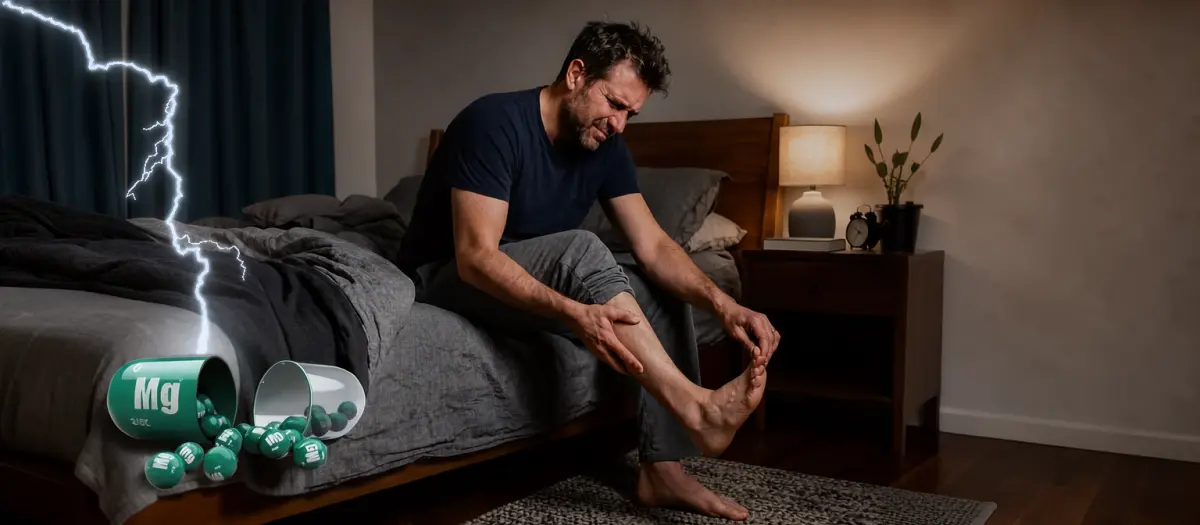
Do your muscles cramp or twitch at night and leave you sore the next day? Do your hands or feet tingle, or do you feel tired and shaky when your nerves feel on edge? Do you worry about your blood pressure, your blood sugar, or headaches that keep coming back? Many things can cause these, but low magnesium is one common piece that often gets missed. The answer to all this could be Magnesium. In the United States, about 48% of people take in less magnesium from foods and drinks than their bodies need.
🪨 Meet Magnesium
Magnesium is a mineral your body cannot make on its own, so you must get it from foods, drinks, and sometimes supplements. An adult body holds about 25 grams of it, with 50% to 60% stored in the bones and most of the rest tucked inside soft tissues. Less than 1% floats in your blood, where levels are kept under tight control.
It helps with many jobs behind the scenes. It helps in more than 300 body jobs, including building protein, keeping muscles and nerves working, controlling blood sugar, and controlling blood pressure. It is also needed to make the instructions inside your cells, and a protector your cells make to handle stress.
Did you know that in 1618, a farmer at Epsom in England found his cows would not drink from a bitter well, but the water seemed to heal scratches and rashes? The salts from that water became famous as Epsom salts, which were later found to be a form of magnesium.
6 Things That Make Magnesium Special
🦵 1. Easing Muscle Cramps and Spasms
Your muscles tighten and relax all day, from walking and lifting to blinking and breathing. To relax after they tighten, they need the right balance of minerals inside and outside the cells. When magnesium runs low, muscles can stay too jumpy. That can bring painful cramps, twitches, tight spasms, and in worse cases, shaking or seizures. Low magnesium often comes with low potassium too, which can make cramps more likely. With enough magnesium, the flow of calcium and potassium across your muscle cells stays smoother, so muscles can let go after they squeeze. For you, that could mean fewer night cramps and less leftover soreness the next morning.
⚡ 2. Calming Jumpiness in Your Nerves
Your nerves carry tiny signals between your brain, your skin, and your muscles. Magnesium helps control how those signals travel, and it helps move calcium and potassium across cell walls, a step that matters for clear nerve messages and a steady heartbeat. When you run short, nerves can get too jumpy. Early signs can be loss of appetite, nausea, tiredness, and weakness, and later numbness and tingling, poor coordination, and changes in mood or personality. Getting enough helps your nerves send signals in a calmer, steadier way. That could mean fewer pins-and-needles feelings and feeling less on edge during the day.
❤️ 3. Supporting Healthy Blood Pressure and Heartbeat
Blood pressure is the push of blood against your vessel walls, and your heartbeat must stay smooth and even to move blood around your body. Magnesium helps vessel walls relax and helps your heart muscle keep its normal rhythm. When magnesium is low for a long time, the risk of high blood pressure, heart disease, and stroke can rise over time. Taking extra magnesium only lowers blood pressure a little, by a few points on average, but diets richer in magnesium are linked to healthier vessels. For you, steady magnesium is one small daily way to look after your heart and circulation.
🍚 4. Helping Your Body Handle Blood Sugar
After you eat, your body breaks food down into sugar in the blood, then moves that sugar into cells for energy. Magnesium helps with that job, and diabetes makes you lose more magnesium in your pee. Getting more magnesium from food is linked to a lower risk of type 2 diabetes, and low magnesium can make the body's response to its own insulin worse. There is not enough proof to use magnesium pills alone to fix blood sugar, but getting enough from your daily diet supports the system that keeps sugar steadier. That matters most if your blood sugar already runs high.
🦴 5. Building Stronger Bones
Your bones are living tissue that keep rebuilding through your whole life. Special cells break old bone down while others build new bone up, and body messengers, including the active form of vitamin D, help guide that work. Magnesium takes part in forming bone and helps control those messengers. Getting more magnesium is linked to thicker bones, and women with weak bones with tiny holes often have lower magnesium in their blood. It is still not clear whether pills can prevent bone loss. For you, meeting your daily need is one more way to protect your bones as you age.
One thing before you keep reading 💛 This article teaches, it doesn't diagnose or treat. What works for most people might not be right for you. A quick word with your doctor or pharmacist before starting is always the smart move.