
The front label wants your eyes on one impressive number. The part that decides whether two bottles are really comparable sits somewhere else.
The short answer
The dose that matters is the combined EPA and DHA amount in the Supplement Facts panel, not the larger total-oil number printed on the front. The National Institutes of Health (NIH) says these formulations vary widely, so check the types and amounts on the label.
The common mistake is comparing total oil instead of the combined EPA and DHA amount, which can make two bottles look alike when their fish-oil fats differ.
The front number can be true and still mislead
The National Institutes of Health (NIH) label database gives a clean example: a serving of two softgels lists 1,200 mg total fish oil, but only 560 mg DHA and 100 mg EPA.
That front number is not false; it is measuring the whole oil amount. In this example, the two named fats add up to 660 mg, so the front number and the comparison number are plainly not the same thing.
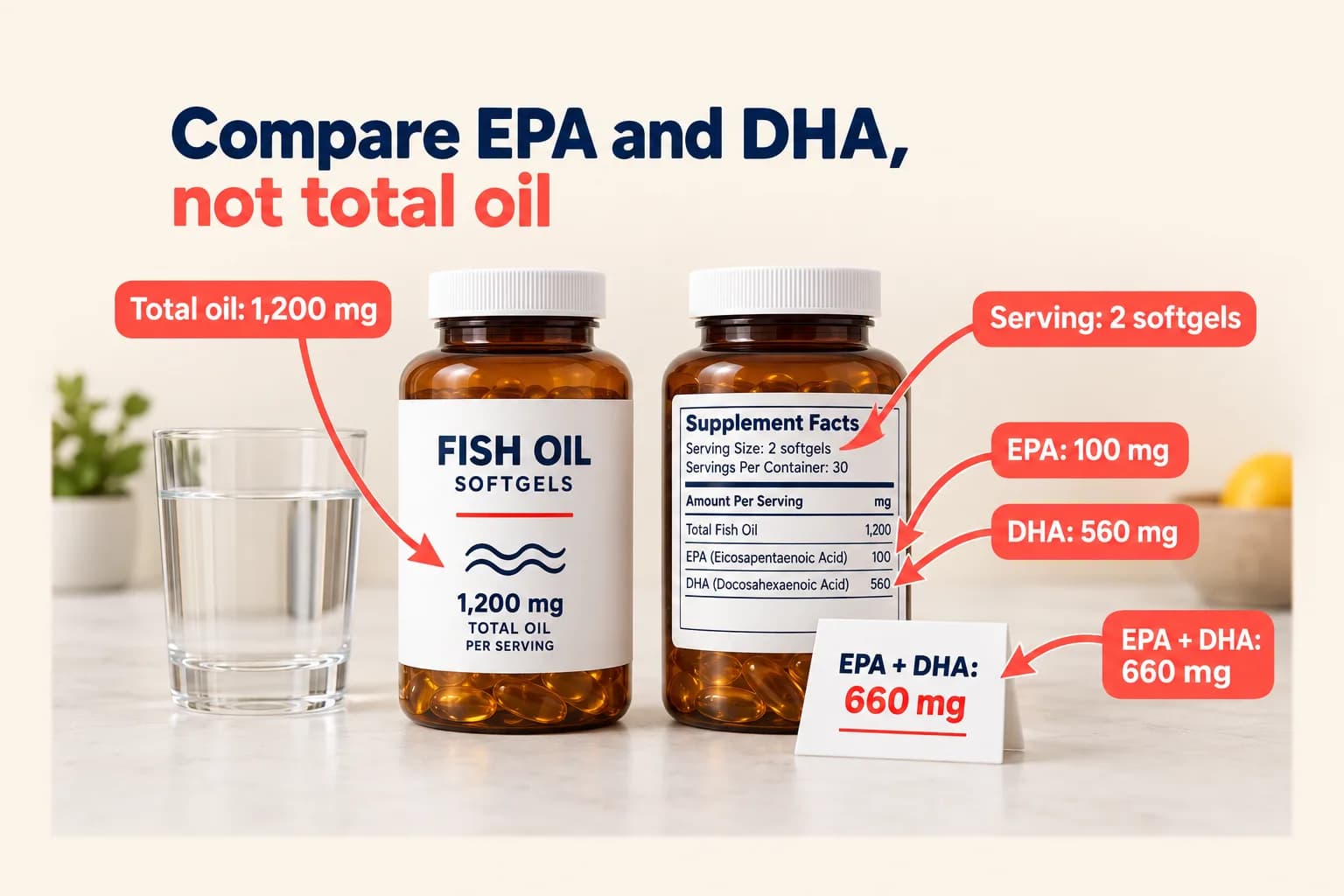
Turn the bottle around
Turn the bottle around. The Food and Drug Administration (FDA) says the Supplement Facts panel must show the serving size and servings per container, plus each dietary ingredient and its amount per serving, except ingredients in proprietary blends.
Match the serving basis first. Then compare the combined EPA and DHA amount for that same serving, rather than comparing one bottle's front number with another bottle's panel number.
That is the useful label-reading habit: use the front for orientation, then use the panel for comparison. You do not need to guess which number a manufacturer wants you to notice.
Why the shelf gives you different answers
An analysis of 255 U.S. fish-oil supplements found these median daily amounts, with substantial variability across products:
- EPA
- 340mg/day
- DHA
- 270mg/day
- combined EPA plus DHA
- 600mg/day
Those medians describe the products examined, not a personal target. They do explain why two bottles can carry similar-looking promises while putting different amounts of the named fats in front of you.
Next time you compare bottles, ignore the impressive front number until you have found the serving size, EPA, and DHA in the panel. If those figures are not clear on the same serving basis, you do not yet have a fair comparison.